(813) 774-3341
 4504 N Armenia Ave Tampa, FL 33603


What to Do After a Side-Impact Collision in Florida
Quick Summary: What to Do After a Side-Impact Collision in Florida
- Document the crash scene fast, since key evidence disappears within minutes.
- Fault in an intersection crash depends on right-of-way, not impact.
- Florida requires PIP coverage to pay first, before any other claim.
- Side-impact injuries often surface days later, so treat early.
- Camera and signal footage disappear fast, so request preservation quickly.
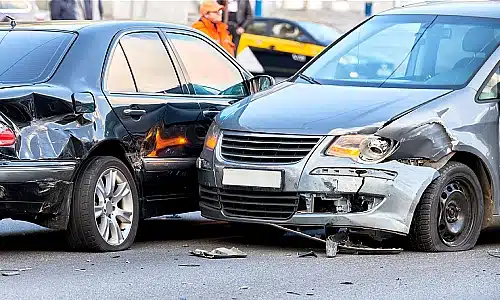
If a car hits you from the side in Florida, the first ten minutes often decide how much you can still prove later. Call 911, leave the vehicles right where they stopped until they’re photographed, get a phone number from anyone waiting nearby, and get checked out the same day. If you’re a Tampa driver turning left across Hillsborough Avenue or clearing the lanes on Dale Mabry Highway as the light turns, you already know how fast that goes and how easily the dispute ends up hinging on two seconds nobody wrote down.
Darrigo & Diaz Personal Injury Attorneys is based right here in Tampa, representing cities and communities in Hillsborough County like Brandon City and Temple Terrace. Attorney Nadine Diaz, a Board Certified Civil Trial Law Specialist by The Florida Bar, handles car accident cases throughout Florida and works regularly within the Thirteenth Judicial Circuit. Here’s how a Tampa claim like yours typically moves forward.
What to Do After a Car Accident That Strikes You From the Side
Right after a side-impact collision, you’re racing against things that are about to disappear: where both cars stopped, what the signal was doing, and who saw it happen. All of that either gets captured in the next few minutes, or it’s gone for good.
- Call 911 and report every complaint, even minor ones, since the dispatch log time-stamps the crash for later.
- Leave the vehicles exactly where they stopped and photograph all four corners, with the curb, stop bar, and lane markings in frame.
- Photograph the signal head for every approach, plus any hedge, parked truck, or barrier that could have blocked a driver’s view.
- Ask the driver behind you for a name and number before the scene clears, since witnesses scatter fast and rarely get tracked down after.
- Get checked out the same day and describe the direction of impact, not just where it hurts.
Knowing what to do after a car accident like this comes down to timing, since those first photos are the only record of how the intersection looked before anyone moved. The repair estimate, the medical chart, and the adjuster’s notes, all of it describes the crash secondhand.
Who’s at Fault in a Tampa Intersection Accident?
Fault in an intersection collision comes down to who actually had the right to go, not who took the hit. Getting struck doesn’t make you the one in the clear.
Florida law puts a duty to yield on every driver approaching a crossing, so these files usually turn on proving a right-of-way violation, and that’s easier said than done. A broadside collision’s crush pattern can show the angle of approach and rough speed, but not whose signal was red, so an intersection accident can look obvious in photos and still end up contested.
A head-on crash is different, since lane position leaves its own evidence, which is why a Tampa head-on collision lawyer builds those cases around gouge marks and debris instead of signal phases. Since it usually comes down to a few disputed seconds, Attorney Nadine Diaz works these cases backward, from the duty to yield to whatever recorded the sequence independently.
Florida’s comparative negligence rules raise the stakes further. Under Florida Statutes section 768.81(6), if you’re found more than 50 percent at fault for a crash that happened on or after March 24, 2023, you can’t recover damages at all. At 50 percent or less, your recovery is reduced by your share of fault. This doesn’t apply to Chapter 766 medical negligence claims.
What a Tampa Police Report Actually Proves
A Florida traffic crash report is really just an officer’s reconstruction of something they didn’t see happen firsthand. Think of it as a starting point for your claim, not the final word on it.
That’s because the narrative and diagram get put together afterward, pieced from statements, skid marks, and where everything ended up resting. Even a citation issued at the scene only reflects the officer’s read on a traffic infraction. It might get paid, dismissed, or worked out in traffic court, and none of that produces a finding that locks in your civil claim. Insurers know this too, which is exactly why an adverse citation rarely settles a dispute on its own.
What the report is genuinely useful for is the basics:
- Driver identifiers and insurance carriers
- The responding agency and any listed witnesses
- Measurements taken before anything moved
Where it tends to fall short is vehicle damage documentation, since the form only allows for coarse damage codes rather than showing what actually happened to your car. That’s where your own photos come in. Taken before the car ever reaches a body shop, they carry far more weight, and they’re the one part of this whole record you actually control.
Why Do Side-Impact Injuries Show Up Days After the Crash?
In a broadside collision, most of the damage comes from your own door, not the other car. There’s no crumple zone on the side of a vehicle, just a few inches of trim between a striking bumper and your hip.
That’s why side-impact crashes can cause unexpected injuries, including pelvic and hip fractures, rib fractures that affect the lungs, shoulder and clavicle injuries, and spinal trauma. Even a moderate-speed T-bone crash can create forces that differ from a front-end collision.
Pain may not appear right away. Adrenaline can mask symptoms, while internal bleeding, disc injuries, or concussion symptoms may surface days later. Delaying treatment can also give insurers a reason to question the cause, so early medical care and clear documentation of the crash can help.
What Does It Mean If Your Side Airbag Did or Didn’t Deploy?
Whether your side impact airbag fired tells you something about the crash itself, not just about how well you were protected.
Side and curtain systems read lateral acceleration and go off based on thresholds set for your specific vehicle, part of why side-impact airbags inflate faster than frontal systems. If it deployed, the sensors picked up a lateral hit of a certain magnitude. If it didn’t, the impact may have simply fallen under your car’s threshold. Either way, both readings matter for a side impact collision claim and can cut in more than one direction.
Things get more complicated when a curtain or thoracic airbag should have deployed but didn’t. That raises questions about the restraint system and requires inspecting the vehicle, since its control module stores sensor data. Once an insurer declares the car a total loss, that data can leave with the vehicle. That’s why we ask clients to hold off on salvage disposal until the vehicle is inspected.
How Fast Do You Need to Move on Camera Footage and Signal Timing?
The recordings that actually show what happened usually survive days, not months. It’s not that the footage doesn’t exist, it’s that nobody’s holding onto it for you.
A single corner along Bruce B. Downs Boulevard could be covered by four unrelated systems, a gas station canopy camera, a pharmacy drive-through, a transit bus, and a municipal traffic feed, and none of those owners has any reason to save what they caught. Most overwrite on a seven to thirty day loop, so a written preservation request naming the date, time window, and camera location is what keeps it from disappearing.
Traffic signal evidence matters just as much and gets missed more often, since signal controllers log phase timing and, at some intersections, which direction held the green, and that’s usually what settles what witnesses end up arguing about. Since both tracks run on someone else’s schedule, anyone handling a side-impact crash sends preservation letters in the first few days rather than waiting until treatment wraps up.
Where Florida No-Fault Insurance Stops and a Claim Against the Other Driver Starts
Your own PIP coverage pays first, no matter who ran the light. That’s just how Florida no-fault insurance works, and it’s why so many people misread what their coverage actually did for them.
Under Florida Statutes section 627.736, PIP covers 80 percent of reasonable medical expenses and 60 percent of lost wages, up to $10,000 with an emergency medical condition finding or $2,500 without, and treatment has to start within 14 days of the crash. For anything serious, that $10,000 often runs out before your first orthopedic visit, and none of it touches your car repairs.
Getting past PIP means clearing a separate bar. Section 627.737(2) only allows non-economic damages for a permanent injury within a reasonable degree of medical probability, significant and permanent scarring or disfigurement, or significant and permanent loss of an important bodily function, and whether your case clears that threshold is the kind of call a car accident attorney in Tampa ends up weighing in on, since it decides whether your claim stays with your own carrier or moves against the other driver.
Who’s at Fault When the Other Driver Denies Running the Red?
When two accounts can’t both be true, fault comes down to whatever recorded the sequence without any stake in the outcome. Independent witnesses and event data recorder downloads showing pre-impact speed and braking carry real weight, and damage geometry tests each account for consistency, since a driver who insists they were stopped at the line has a hard time explaining an intrusion pattern consistent with thirty-five miles per hour.
Who’s involved matters just as much as the evidence. A delivery van crossing Kennedy Boulevard brings an employer, a commercial policy, and telematics data a private driver never generates, and a chain reaction that pushes a Brandon commuter’s car into a third vehicle creates competing apportionment among several insurers at once. Even a crash logged as single-vehicle is still a two-party claim underneath.
Claims like this get filed in Hillsborough County and move through the Thirteenth Judicial Circuit, with civil matters heard at the George E. Edgecomb Courthouse in Tampa, and that local familiarity is part of what Attorney Nadine Diaz brings to these files.
Tampa Side-Impact Crash FAQ
How long do I have to file a car accident claim after a side-impact collision in Tampa, FL?
You generally have two years to file for negligence claims arising on or after March 24, 2023, under Florida Statutes section 95.11(5)(a), published through Online Sunshine. That’s actually the last deadline to expire, not the first, since policy notice terms, treatment windows, and video retention schedules all close well before that. If a wrongful death claim is involved, that carries its own two-year deadline under section 95.11(5)(e).
Does Florida’s no-fault insurance cover all my expenses after a T-bone crash in Tampa?
No, and honestly the better question is what PIP was actually built to do. It moves money toward your treatment quickly so care isn’t held up while everyone argues over who is at fault in a T-bone accident. It was never meant to measure your total loss, so vehicle damage, whatever’s left unpaid on your medical bills, lost earning capacity, and non-economic harm all fall outside of it.
What evidence should I gather at the scene of a side-impact collision in Tampa, FL?
Gather whatever nobody else has a reason to hold onto. Photograph the inside of both cars before anything gets moved, jot down the first thing the other driver says, and write out your own symptoms that same evening while it’s all still fresh. The official report itself usually takes a few days to show up on Florida’s crash report portal, which is part of why there’s no need to chase it down at the scene.
Talk With Darrigo & Diaz About a Side-Impact Crash in Tampa, FL
Have more questions after being struck from the side in Tampa, FL? Attorney Nadine Diaz, a Board Certified Civil Trial Law Specialist by The Florida Bar, can discuss timing, documentation, and options under Florida law.
Speaking with an attorney early can clarify what steps remain available while records and footage are reachable. Get help with us or call (813) 774-3341.