(813) 774-3341
  4504 N Armenia Ave Tampa, FL 33603

Tampa Stairway Accident Lawyer
Quick Summary: Tampa Stairway Accident Lawyer
- Florida Building Code sets specific riser, tread, and handrail measurements for Tampa stairs.
- Code violations serve as evidence of negligence, not automatic proof, in stairway claims.
- Florida’s two-year statute of limitations generally applies to most stairway injury claims.
- Property owners, managers, and contractors can all share liability for a defective stairway.
- Attorney Nadine Diaz is Board Certified in Civil Trial Law by The Florida Bar.
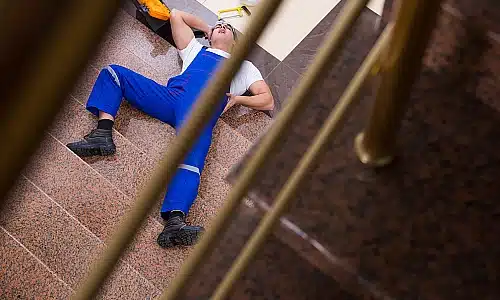
Around Tampa, uneven stairs can be found in office stairwells along Kennedy Boulevard. They can also be found in older apartments in Seminole Heights and parking garages in the Channel District. After a fall, the question is whether the stairs were built and maintained according to the law.
A single stair set a fraction of an inch too high is enough to throw off someone’s stride before they even know why. Darrigo & Diaz Personal Injury Attorneys represents injured people throughout Tampa and Hillsborough County from our office on Armenia Avenue, with clients reaching out from Brandon, Temple Terrace, Carrollwood, and Town N Country as well. Attorney Nadine Diaz, a Board Certified Civil Trial Law Specialist by the Florida Bar, handles stair injury cases that come down to measurements, building standards, and the records behind how a hazard got there.
What Makes a Stairway Legally Defective on a Tampa Property
Not every fall on a staircase creates a legal claim. In every negligence case, a Tampa personal injury lawyer looks at the facts. Florida law asks whether the property owner knew or should have known about a condition. The property owner must fix the hazard. Broken or poorly maintained stairs can easily lead to accidents. The steps may be uneven, cracked, or worn, while handrails may be loose or missing. Poor lighting can also make it difficult to see where one step ends and the next begins.
That kind of defect often existed long before anyone got hurt. This is what makes it useful for establishing notice, the most contested part of most premises liability claims. Attorney Diaz starts every stairway accident case the same way: how long was the condition there, and who had the chance to see it?
Tampa Building Code Requirements for Stair Construction
The Florida Building Code puts limits on stairs in Tampa. For commercial and multifamily buildings, each riser can’t be more than 7 inches high and the tread must be at least 11 inches deep. In buildings, the riser can go up to 7 ¾ inches and the tread must be at least 10 inches. Consistency is just as important. The code says that the difference between the riser and the shortest riser in a flight can’t be more than 3/8 of an inch. The same rule applies to treads. One step that’s out of alignment can trip a person even if all the others look normal. A single irregular step can be the difference between a walk and a fall.
A stair riser height code violation like this isn’t always visible, which is why measurements carry more weight than a property owner’s word that the stairs “looked fine.”
Handrail Requirements for Tampa Commercial and Residential Stairways
A handrail is the last line of defense once someone loses their balance. Florida’s handrail requirements call for rails mounted between 34 and 38 inches above the stair nosings, often on both sides of commercial stairways, and shaped so a hand can actually wrap around and hold on, generally between 1¼ and 2 inches in outside diameter for a circular rail.
Wide decorative boards, oversized posts, and rails blocked by walls or brackets can look sturdy and still fail that standard. A handrail defect often looks like:
- A rail that ends before the last step.
- An anchor that’s worked loose under weight.
- A wide stairway missing a rail on one side.
- A rail too thick or flat to grip.
These specifications come from the Florida Building Code, the same standard engineers use when evaluating a property.
Tampa Stairway Lighting and Surface Safety Requirements
Many stair accidents happen when someone misjudges a step. Poor lighting can make this even worse. When the lights are too dim or poorly placed, the steps can blend together and make the staircase look almost like a ramp.
This can happen on outdoor stairs at nightlife spots in Ybor City. Lights may burn out or fail to properly illuminate the steps. The front edge of each step, called the nosing, can also become a hazard. Cracks and wear can make it harder to see. The same is true when the contrasting strip on the edge starts to fade.
Wet stairs are another concern. Florida’s afternoon storms can leave outdoor stairs wet for hours. Painted concrete can become slippery when anti-slip coatings are not properly maintained. These problems can often be spotted during the same site inspection.
How Florida Code Violations Support Your Tampa Injury Claim
Under Florida law, a building code violation is treated as evidence of negligence rather than automatic proof of it, so a jury in the Thirteenth Judicial Circuit weighs it alongside other facts, like how long the condition existed and whether the owner had already received complaints or inspection reports. That’s where records come in: property owner negligence becomes much easier to demonstrate once records show the owner knew about defective stairs and chose to postpone repairs anyway. Useful sources often include:
- Maintenance logs and work orders
- Prior incident reports involving the same staircase
- Tenant or customer complaints
- City of Tampa permit and building inspection records
Attorney Diaz uses records like these to connect a measured defect to a documented decision, and since stairway accident cases typically proceed in the Thirteenth Judicial Circuit, how that violation gets presented there can shape how both the defense and a jury weigh it.
Where Tampa Stairway Accidents Commonly Occur
The type of property often decides who controls the stairs, so a falling down stairs injury at an apartment complex in Tampa Heights might involve the owner and an outside management company, while a hotel near the Tampa Convention Center could share that responsibility with a renovation contractor. Each setting brings its own risks:
- Apartments: Exterior stairs exposed to weather and delayed repairs between tenants
- Hotels: Heavy guest traffic and stairwells used mainly during emergencies
- Parking garages: Concrete stairs near Amalie Arena and in the Channel District that see surges of event crowds
- Retail properties: Short step changes at storefronts in Hyde Park or SoHo that shoppers may not expect
These conditions rarely trace back to just one decision, whether it’s a skipped repair, an ignored work order, or a deferred capital project, which is why our legal team works to identify each party involved, since limiting a claim to a single defendant can leave recoverable losses unaddressed.
Why Tampa Stairway Accident Victims Need Expert Inspection Before Property Repairs
Property owners often fix a staircase within days after the fall accident, and while a new handrail or tread may seem like a reasonable safety step, it can erase the most important evidence in the case, since once a riser is rebuilt, its original height can be difficult, or even impossible, to establish. That’s why an independent engineer matters here, using calibrated tools to document riser height uniformity, tread depth, handrail placement, and lighting before that evidence disappears, and Attorney Diaz can send a formal request asking the owner to preserve the stairway as-is until that inspection happens.
Two mistakes come up often: waiting until after repairs to photograph the steps, and photographing only the step where the fall happened instead of the whole flight, which hides the comparison that proves non-uniformity. Getting a stairway accident claim into legal hands early is what gives that evidence a chance to survive long enough to be measured.
Why a Stair Injury Claim Is Built Differently From a Slip and Fall or General Premises Claim
A typical slip and fall matter and a stair injury claim start from different places, and that difference shapes almost everything about how each case gets built.
Slip and Fall and General Premises Claims
A typical slip and fall matter centers on a temporary hazard, like a spilled drink or a wet floor, and whether the owner had time to find and clean it before someone got hurt, which is the kind of transient condition someone searching for a Tampa slip and fall lawyer is usually dealing with. A premises liability lawyer handling a broader property claim like this tends to focus on inspection routines and how quickly that hazard should have been caught.
Stair Injury Claims
Staircases rest on something more permanent: measurable features that were built or maintained incorrectly from the start, which is why they lean on engineering data and code sections rather than inspection timing. That distinction carries into fault too, since under Florida comparative negligence rules in Florida Statutes § 768.81(6), states that a person found more than 50 percent at fault for their own injury generally cannot recover, and a lower share of fault reduces the award accordingly.
Defense teams often argue the injured person should have watched their step, but a non-uniform riser is built to escape notice, and that argument tends to lose its footing once the measurements back it up, which is exactly where Attorney Diaz starts building the case.
What Damages Can Be Recovered After a Tampa Stairway Injury
Stair falls often cause fractured wrists, ankle and hip injuries, and head trauma, with treatment sometimes starting at a facility like Tampa General Hospital before moving into orthopedic or rehabilitation care. Depending on the facts, a person pursuing a stairway accident claim may seek compensation for:
- Past and future medical expenses
- Lost wages and reduced earning ability
- Pain and suffering
- Loss of enjoyment of daily activities
What any claim is worth depends on the injury, the evidence, and how fault gets allocated, so no specific result can be promised, and every premises liability claim filed at the George E. Edgecomb Courthouse, the Hillsborough County courthouse in downtown Tampa, is evaluated on its own record. Attorney Diaz’s background in civil trial work means she prepares each case with a clear view of how it could be presented if settlement discussions don’t resolve it.
Tampa Stairway Injury Claim FAQ
How long do I have to file a claim after a stair injury in Tampa, FL?
For most negligence claims accruing on or after March 24, 2023, Florida Statutes § 95.11(5)(a) generally allows two years, and a wrongful death action generally carries a two-year limit under § 95.11(5)(e). The practical deadline is often shorter. Claims involving stairs at a public facility can require written notice to the government entity before a suit is filed, and memories of who was on the steps that day fade much faster than two years.
Who can be held responsible when someone falls on stairs at a Tampa apartment complex or commercial property?
The answer may sit inside a contract you never saw. A commercial lease can shift stair maintenance from the landlord to a business tenant, and a management agreement can assign repairs to a third party. Your own status on the property, whether as a tenant, customer, or guest, can also change the duty owed to you, so the paperwork behind the building matters as much as the building.
What should I keep after a stair fall in Tampa before the owner changes the staircase?
Start with what you were wearing. Keeping your shoes unwashed and unaltered can help rebut claims that footwear caused the fall. Security footage is often overwritten within days or weeks, so a prompt written request matters. Returning at the same hour to photograph the lighting can reveal what a daytime photo misses, and the Hillsborough County Clerk’s court records may show earlier lawsuits naming the contractors who previously worked on the same staircase.
Discussing Your Tampa Stair Injury With Darrigo & Diaz
If you were hurt on a staircase in Tampa, FL, a conversation about timing, documentation, and your legal options may help you decide what comes next. Speaking with an attorney early can help you understand what steps may be available under Florida law.
Darrigo & Diaz Personal Injury Attorneys welcomes the chance to review what happened and answer your questions. Contact us or call (813) 774-3341 to discuss your situation.