(813) 774-3341
 4504 N Armenia Ave Tampa, FL 33603


What Is a No-Zone Truck Accident?
Quick Summary: What Is a No-Zone Truck Accident?
- A tractor-trailer has four no-zones, including blind spots up to 200 feet behind it.
- The right-side blind spot is the largest, sometimes covering more than one lane.
- FMCSA rules require two mirrors, but visibility still depends on proper mirror aim.
- Florida’s 51% rule can reduce or bar recovery if you share fault for the crash.
- Florida law generally gives no-zone accident victims two years to file a claim.
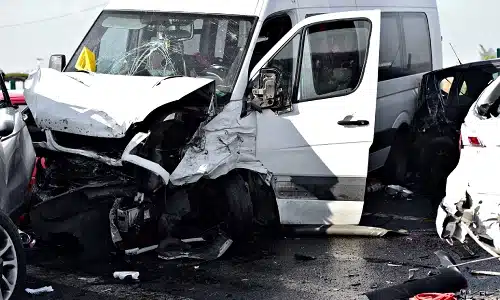
A no-zone truck accident happens when your car ends up somewhere a truck driver simply can’t see it, in a blind spot the mirrors miss. If you’ve been searching “what is a no zone” after a crash in Tampa, there’s a good chance a tractor-trailer drifted into your lane on I-4, or a rig leaving Port Tampa Bay swung wide onto Adamo Drive with you right beside it, and afterward you heard the same line, that the driver never saw you there.
That’s usually where Darrigo & Diaz Personal Injury Attorneys comes in. As a Tampa firm, we work with people hurt in these crashes across Hillsborough County, including Brandon and Temple Terrace, and Attorney Nadine Diaz, a Board Certified Civil Trial Law Specialist by The Florida Bar, handles truck accident matters here and treats that line as where your case starts.
The Four Semi Truck Blind Spots on a Tampa Big Rig
A tractor-trailer has four main blind spots, or no-zones. There is one in front, one behind, and two along the sides. The rear blind spot can extend up to about 200 feet. This can surprise drivers on I-275. A car may look far enough behind a truck but still be out of the driver’s view. The side blind spots also get wider near the trailer.
The Federal Motor Carrier Safety Administration gives a simple rule: if you cannot see the driver’s face in the mirror, the driver cannot see you.
Right-Side Visibility Is a Tractor-Trailer’s Weakest Spot
The right-side blind spot is usually the largest because of where the driver sits. Since the driver is on the left side of the cab, it is harder to see what is beside the truck on the right. This can create a no-zone that covers more than one lane.
This is also a common concern when trucks merge near I-75 exits. The driver has less visibility on the right side while moving toward the exit. The left side is easier to check because the driver can look directly through the window.
On-ramps can create a similar problem. A car traveling beside the right side of a trailer may stay hidden from the truck driver for much of the merge.
FMCSA Mirror Requirements for Tampa Truck Drivers
Federal law actually spells out what a truck’s mirrors are supposed to do. Under the federal rear-vision mirror rule, trucks and truck tractors generally need to meet two requirements before they’re allowed on the road.
- Two outside mirrors, one on each side, positioned so the driver can see the highway behind both sides of the vehicle.
- A pre-drive check confirming those mirrors are in good working order before the driver gets behind the wheel.
FMCSA rules cover truck equipment and maintenance, but they cannot make a driver actually check the mirrors. A mirror may meet the visibility requirements when properly adjusted, but that can change if it gets bumped at a loading dock in Ybor City.
The pre-trip inspection duty falls under 49 CFR 392.7. It specifically includes rear-vision mirrors. If a mirror is poorly adjusted, that can point to an issue with the driver’s inspection duty as well as the truck’s maintenance.
Wide Right Turns Create Squeeze Play Crashes on Tampa Streets
A squeeze play crash follows a specific sequence, the truck swings left to set up a right turn, a car or motorcycle slips into the gap on the right, and the trailer closes that gap as the turn finishes, pinning whatever got caught between the trailer and the curb, right inside the right-side no zone, with real crushing force even at low speed.
Florida law addresses this too, since Section 316.151 generally requires right turns as close as practicable to the curb, and plenty of tractor-trailers can’t pull that off, which is usually how a wide right turn accident turns into an argument over the driver’s setup, signal timing, and starting lane.
Picture a delivery rig turning right from Hillsborough Avenue into a supply yard, with a cyclist and a sedan at the curb, since semi-truck collisions like this can injure several people at once, each holding a separate claim.
How Following Distance Creates No-Zone Collision Risk
Following distance and stopping distance decide whether your car ends up inside a truck’s blind area at all. The FMCSA notes that a large truck can need up to two football fields to stop, so cutting in close ahead of a rig can land you straight in that front no-zone with no room to recover.
Then there’s the reverse problem, truck following distance. Training teaches roughly one second of gap per 10 feet of vehicle length, plus an extra second past 40 mph, and Florida backs that up too, since Section 316.0895 bars a truck from following within 300 feet of another truck outside business or residential districts.
A rig tailgating you on Dale Mabry Highway keeps your car in its front zone for every second that gap stays short. The safer habit is to pass steadily rather than pace beside a trailer, leaving enough following distance to see the whole cab in your mirror before merging back.
How Do You Prove Your Vehicle’s Position in a Tampa No-Zone Accident
Once a crash happens, the story usually splits into two versions, yours and the truck driver’s, and there’s rarely an easy way to settle it by memory alone. That’s why position in a no-zone case almost always gets proven with evidence instead of argument, and knowing where that evidence comes from can help you protect it before it disappears.
Physical Evidence Comes First
Proving the position is usually the first thing a Tampa truck accident lawyer works through in a blind spot accident, and it comes down to physical evidence more than competing memories. Damage location, the height of the paint transfer, and where debris came to rest can place your car beside, ahead of, or behind the trailer more reliably than either driver’s account ever could.
Your Own Car Keeps a Record Too
Your own vehicle may also have useful evidence. Many cars have an event data recorder that captures details like speed and braking around the time of a crash. A dashcam or navigation app may also record the time and location. Witnesses can help too. However, their location at the time of the crash matters because it affects what they could actually see.
Evidence Fades and Fault Gets Murky
Car data can disappear quickly if the vehicle is salvaged before anyone retrieves it. Figuring out who was at fault can also be difficult when the situation is unclear. This may happen in a Hillsborough County truck crash where a third car swerves or during a slow lane change in Westshore traffic with no witness to confirm what happened.
How Attorney Nadine Diaz Builds the Picture
Attorney Nadine Diaz approaches these cases by matching the damage pattern to the lanes, then testing whether the truck driver’s version of events could have actually produced those same marks.
Shared Fault Doesn’t End Your Case Under Florida’s 51% Rule
Shared fault matters, but it doesn’t automatically end your claim. Under Florida Statutes § 768.81(6), a person found more than 50 percent at fault for their own harm can’t recover, while at 50 percent or less, your recovery just gets reduced by that share. The rule took effect March 24, 2023, and applies to lawsuits filed after that date.
In no-zone cases, the argument against you as the car driver usually follows the same pattern, that you lingered beside the trailer, passed on the right, or cut in too close. Each can carry weight under the comparative negligence Florida juries apply, but none of it erases the truck driver’s duty to confirm a lane is clear, and a blind spot the driver already knew about calls for more caution, not less.
One carve-out is worth knowing: subsection (6) doesn’t reach medical negligence actions under Chapter 766, which stay under pure comparative negligence. That rarely touches a truck case, but it shows the 51 percent bar isn’t universal.
How Fault Percentages Apply to Your Losses in a Hillsborough County Case
Once a percentage gets assigned, it doesn’t just chip away at one part of your claim, it applies across the entire award. That means it reaches every category a truck crash claim may include, from your medical bills to what the crash cost you outside of the hospital.
- Medical expenses, both past and expected
- Lost wages and reduced earning ability
- Property damage to the vehicle
- Pain and suffering
Each part of the case still needs to be supported with evidence. Nothing is automatic. If a Tampa case goes to trial, a jury in the Thirteenth Judicial Circuit decides how much fault each side may have. Attorney Nadine Diaz’s experience with the court can help address shared-fault arguments. Jurors consider whether the car driver acted with reasonable care, just as a car accident attorney in Tampa would assess in a typical two-car crash.
Truck-Side Evidence Disappears Fast After a Tampa Crash
Mirror position can be one of the first pieces of evidence to change. A tow operator, mechanic, or driver may move it without realizing its importance. Dashcam footage can disappear too, since many systems record over old files. ECM data usually lasts longer, but it can still be overwritten if the truck keeps running.
Each source tells a different part of the story. ECM data can show speed, braking, and throttle activity before the crash. Cameras and warning-system logs may show what happened just before impact. The mirror position can also help show where the driver was looking.
Evidence can easily be lost after a crash. Common mistakes include:
- Photographing the car’s damage but never the truck’s mirrors up close.
- Assuming the carrier will keep camera footage without a written request.
- Letting the truck return to service before its equipment gets photographed.
- Sharing screenshots of scene photos instead of the original files, which carry time and location data.
The carrier controls nearly all of this material, which is where a lawyer who knows what to ask for makes a real difference.
Tampa No-Zone Truck Accident FAQ
How long do I have to file a no-zone truck accident claim in Tampa, FL under Florida’s statute of limitations?
Usually two years. For causes of action accruing on or after March 24, 2023, Florida Statutes § 95.11(5)(a) gives most negligence claims two years, and § 95.11(5)(e) gives wrongful death claims the same, per the Florida Legislature’s Online Sunshine site. One crash can start two clocks, since a wrongful death claim runs from the date of death, not the collision.
Can I still recover compensation for a no-zone truck accident in Tampa if I was partially at fault under Florida law?
Often, yes, and part of what you receive may not depend on fault at all. Florida’s personal injury protection coverage pays a share of your medical bills and lost income regardless of fault. The harder question is usually pain and suffering, which Florida’s no-fault law reserves for injuries meeting a permanency threshold, so your medical record matters just as much as fault.
What should I do immediately after a no-zone truck accident on Tampa highways to protect my legal rights?
Get medical care first, and watch your words while you do, since a quick apology can later be framed as an admission, so stick to describing lanes and timing. Then make sure police document the crash, since Florida requires a report whenever a commercial motor vehicle is involved, as the state’s crash reporting guidelines explain.
Have More Questions About a No-Zone Truck Accident in Tampa? Darrigo & Diaz Can Help
Darrigo & Diaz Personal Injury Attorneys can talk about timing, the documentation gathered so far, and your legal options after a no-zone truck accident in Tampa. Speaking with an attorney early can help you understand what steps may be available under Florida law.
Contact us or call (813) 774-3341. Every case turns on its own facts, and a conversation shows where yours stands.